
Capability
Tooling, dies & fixtures
A fixture is not overhead added to a job. It is the thing that makes part number 200 the same as part number 2, holding every part the same way so the machine repeats instead of guesses. This covers workholding built for a specific job, stamping and forming dies, and inspection gauges.
What a fixture holds
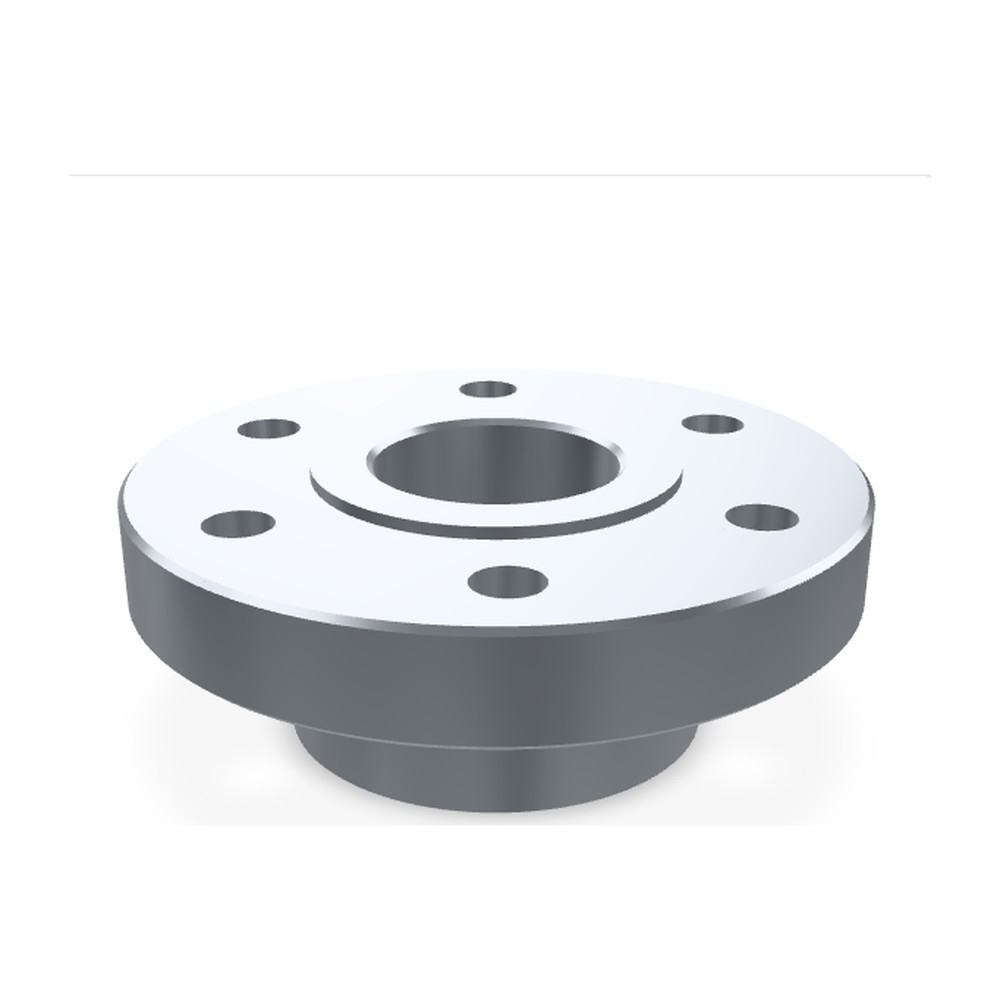
The part a fixture is built around
A precision flange is a good example of why a repeatable setup matters: the bore, the raised face and the six-hole bolt circle all have to land in the same relationship to each other on part 1 and on part 200. A fixture that locates the part the same way every time is what makes that true without hand-checking each one.
Switch to the machined bracket and the same logic applies to a part with slotted, not round, features. The clamp still has to find the part the same way every time, or the slot position drifts across the run.
Interactive
What a dedicated fixture is worth to you
Type your own numbers in. The result is your arithmetic, run on your batch size and your shop rate, not a figure we are asking you to take on faith.
Fixture payback calculator
Four numbers, all yours to set.
Illustrative Parts, batches and minutes saved start at placeholder numbers so the calculator has something to show. Overwrite all three with your own before reading the result.
Value saved per year = hours saved per year × your shop rate
Hours saved per year
–
Value saved per year
–
Enter your shop rate to see a dollar value.
Interactive
From part to fixture
Four steps, the same order every time. Move through them below.
Locate: the 3-2-1 principle
A rigid part with nothing holding it has six ways it can move: it can slide along three directions and tip or spin around three more. A fixture takes each of those away with contact points, not with force. Three points on the biggest face fix which way is down and stop it rocking. Two more points on a second face fix which way is sideways and stop it sliding or spinning flat. One more point on a third face stops it sliding in the last direction. Six points, six directions taken away, and the part cannot move anywhere it is not supposed to before a clamp ever touches it.
stop rock and drop 2points, second face
stop slide and spin 1point, third face
stop the last slide
Clamp
Once the part is located, the clamp only has one job left: hold it against those six points through the cut, without pulling it off any of them. A clamp placed over an unsupported span can spring the part instead of holding it still, which shows up later as a part that measures differently than it cut.
Prove
Before the fixture runs a real batch, the first part out of it gets checked against the drawing, feature by feature. That first-article check is what confirms the locating scheme actually delivers the tolerance on paper, not just in theory.
Repeat
After that, the fixture is the process: load, cut, unload, load the next one the same way. Part 2 and part 200 sat on the same six points, so the variation between them is whatever the machine contributes, not whatever the operator's hands contributed.
Questions we get asked at quote
Is a fixture included in the part price, or billed separately?
It is quoted on its own against your part and your quantity, so you can see what it costs and decide whether the run is long enough to justify it. The calculator above is there to help with that call before the quote comes back.
What does first article inspection look like with a dedicated fixture?
The first part off the fixture is checked feature by feature against the drawing before the rest of the batch runs, which is what confirms the fixture is actually locating and holding the part the way it was designed to.
Do you build dies and gauges as well as workholding?
Yes. Tooling, dies and fixtures cover stamping and forming dies and inspection gauges alongside machining fixtures, all designed and built in the same shop that runs the parts.
How long does a fixture take to design and build?
It depends on how complex the locating scheme is and how many parts it has to hold at once, which is exactly the kind of thing that gets a straight answer once we have your drawing in front of us rather than a general number on a website.