
Capability
Design and engineering
We design in SolidWorks in house, so a concept, a rough sketch or a part that broke can become a drawing before it becomes a machined part. You are not sent looking for a separate engineer first, and the person building the model is the same shop that will cut the metal.
Interactive
Read the drawing
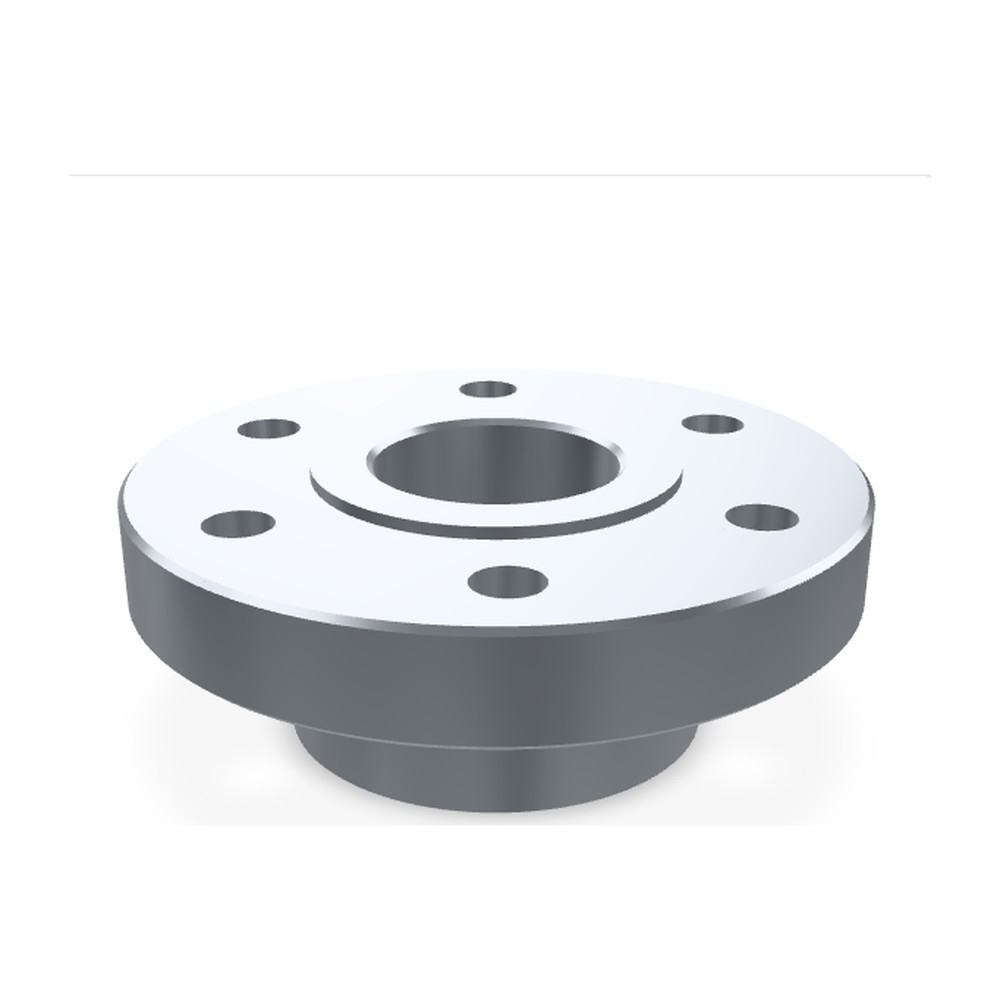
The numbers on the model are not decoration. Each one is a feature the drawing calls out on purpose: a bore held to a fit, a flatness call on a sealing face, a bolt circle held to a true position so a set of holes lines up without reaming. Tap a number to read what it means and why it is held that way.
Because we design in house, decisions like these get made before the drawing goes out, not discovered after a part comes back. A tight fit is more expensive to hold and to inspect than a general tolerance on the same feature, so we ask what the feature actually mates to before locking in a number nobody needs.
Switch to the manifold block for the same idea applied to threaded ports and a main gallery: a counterbore sized to clear a screw head, an edge break that keeps a sharp corner away from an O-ring, a bore sized to the fit it actually has to do.
Interactive
Concept to part, five stages
Step through what happens, what we need from you at that point, and what you get to keep once the stage is done. The last column is the one that matters commercially: once a drawing exists, the next order starts from it instead of from zero.
Conversation
What we do
Talk through the part: what it does, what it mates to, and what has gone wrong before if this is a repair.
What we need from you
A description in your own words, a photo or sample if you have one, and a rough sense of quantity and timeline.
What you keep
Nothing formal yet. A shared understanding of the job before either side puts pen to paper.
Measure or sketch
What we do
Measure the sample on the bench, or sketch the concept to the dimensions you give us.
What we need from you
The physical part if there is one, or your best rough dimensions and a sketch if there is not.
What you keep
A working set of measurements that both sides can check against.
SolidWorks model
What we do
Build a 3D model in SolidWorks, in house, so the part exists as real geometry before a chip is cut.
What we need from you
Sign-off on the model, and anything about the fit that a measurement alone will not show, such as what it bolts to.
What you keep
The model itself, and every file that comes from it afterward.
Drawing with the tolerances that matter
What we do
Turn the model into a dimensioned drawing and decide, feature by feature, which tolerances actually matter and which sit at a general default.
What we need from you
A final look at the print. This is the document the part gets machined and checked against.
What you keep
A drawing with your part number on it, ready to quote and reorder cleanly this time and next time.
Machined part
What we do
Machine the part to the drawing, on the same cell that quoted it.
What we need from you
Nothing further. The next step is receiving it.
What you keep
The finished part, plus the drawing and the model. All three, so the next order does not start from scratch.
Before you send it
Three ways a job arrives
A job can start from a complete print, a model with no print, or nothing but a part. Here is honestly what each one asks of us before it can be quoted.
A full drawing
Nominal dimensions and tolerances are already decided. Our part is reviewing it for how the geometry will actually be held and cut, then pricing it. That review happens on every job regardless of how it arrives, so a complete print adds the least additional time on our side.
A model, no drawing
We can program straight from the solid geometry, but nobody has yet decided which dimensions are the ones that matter. Producing a dimensioned drawing, or at least tolerancing the model, happens before we can quote a hold-to number. That is real time added, in between the two extremes.
Nothing but a sample
The part has to be measured, modeled in SolidWorks, and drawn, with the tolerances that matter decided by us since there is no print to reference. That is the most in-house time of the three, and it happens once. Every order after the first is quoted like a full-drawing job, because by then the drawing exists.
Questions we get asked about design
I only have a broken part, no drawing. Can you still help?
Yes. Bring the part. We measure it, model it in SolidWorks in house, and produce a drawing before we machine the replacement. The drawing is yours afterward, so a reorder does not start the same process over again.
Do you design from scratch, or only cut to print?
Both. Because design happens in house, a job can start from an existing print, or from a concept, a sketch, or a sample with no print at all.
Who decides which tolerances matter?
That is a conversation, not a default. We will ask what a feature mates to and how it needs to perform, and tolerance it accordingly rather than tightening every dimension on the print. The tolerance explorer on the CNC machining page shows what each band actually demands.
If I already have a print, is any of this design step still relevant?
Often, yes, in a smaller way. Even a complete print gets reviewed for how it will actually be held and cut before it is quoted. If a dimension or a tolerance looks like it was set without a reason, we will ask about it rather than machine it blind.