
Capability
Custom & metal fabrication
Cut, formed and welded work that finishes on a machine rather than on a bench. A weldment can be cheaper and stiffer than a solid billet for a big bracket, but a weld moves the metal around it, so any feature that has to hold a tolerance gets machined after the welding is done, never before.
Interactive
Weld it, or machine it from solid?
Four questions about the part decide which way this goes. Set them to match your job and the reasoning updates below, including the times the cheaper answer is the right one.
Weld-or-machine tool
Not a quote. A way to see the trade-off before you send the drawing.
…
The conversation, on a real part
A gusseted bracket is the whole argument in one shape
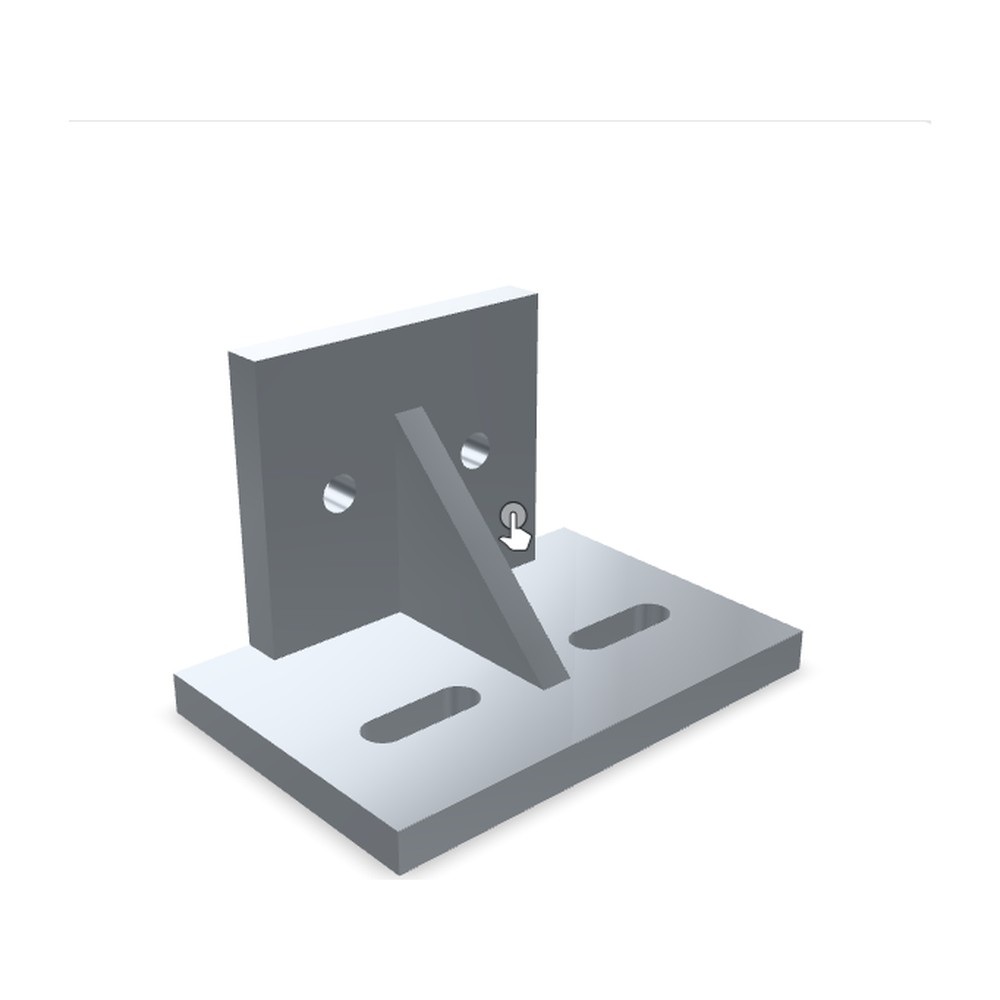
This is a right-angle mounting bracket with a machined gusset instead of a welded one. The gusset stiffens the joint, the slots give an installer travel, and the two fixing holes are true-positioned to a tolerance a weld could never hold on its own. Drag it, zoom it, tap a number.
Switch to the manifold block and the same question shows up from the other side: a part that is milled from solid billet because the cross-drilled ports need to intersect cleanly, not because it could not have started life as weldment.
- What stays welded. Bulk, stiffness and shape that does not touch a mating part.
- What gets machined. Bores, faces, bolt patterns and any feature that has to fit something else.
- What never happens. A tight hole cut before the weld that heats it and moves it out of position.
Why the order matters
What welding does to the metal around it
Heat a joint and the metal on both sides of it expands, then contracts again as it cools. That movement is not uniform, so a part can come off the welding table measurably out of flat or out of square even when every weld itself is sound. Machine a precise feature before that happens and the feature moves with the rest of the part. Machine it after, and it is cut to the part as it actually sits, not as the drawing assumed it would sit.
-
Fabricate
Cut, formed and welded to rough shape and size, with stock left on any feature that will later be machined to a tolerance.
-
Stress relieve, if required
Some combinations of material, section size and weld heat call for a stress relief before machining, so the part does not keep moving after it is cut.
-
Machine the critical features
Bores, faces and bolt patterns cut last, on the part as it actually is, so what leaves the shop is what the drawing called for.
Questions we get asked at quote
Can you weld and machine the same part?
Yes, and for a lot of brackets and weldments that is the actual job: cut and formed pieces welded up, then the critical faces, bores and bolt patterns machined afterward so they fit whatever they mate to.
Will welding distort my tight-tolerance holes?
If those holes are cut before the weld, quite possibly. That is why the sequence above puts machining last for anything that has to hold a number. A hole cut after the part is welded and, if needed, stress relieved, is cut to the part as it sits.
Do you do stress relieving?
It gets built into the process where the material, section size and weld heat call for it, ahead of the finish machining. Whether your part needs it is part of the conversation at quote, not a blanket step applied to everything.
Can you help me design the part, not just build it?
Yes. Design and engineering is done in house in SolidWorks, so a weld-versus-machine call, or a redesign that removes a weld entirely, can happen before anything is cut rather than after.