
Capability
CNC machining
Milled and turned parts, cut to your print, from a single prototype through a repeating production run. The person quoting the job is the person who will run it, so what you hear about tolerance, material and lead time is what the machine will actually do.
Turned and milled
A part you can turn over before you talk to us
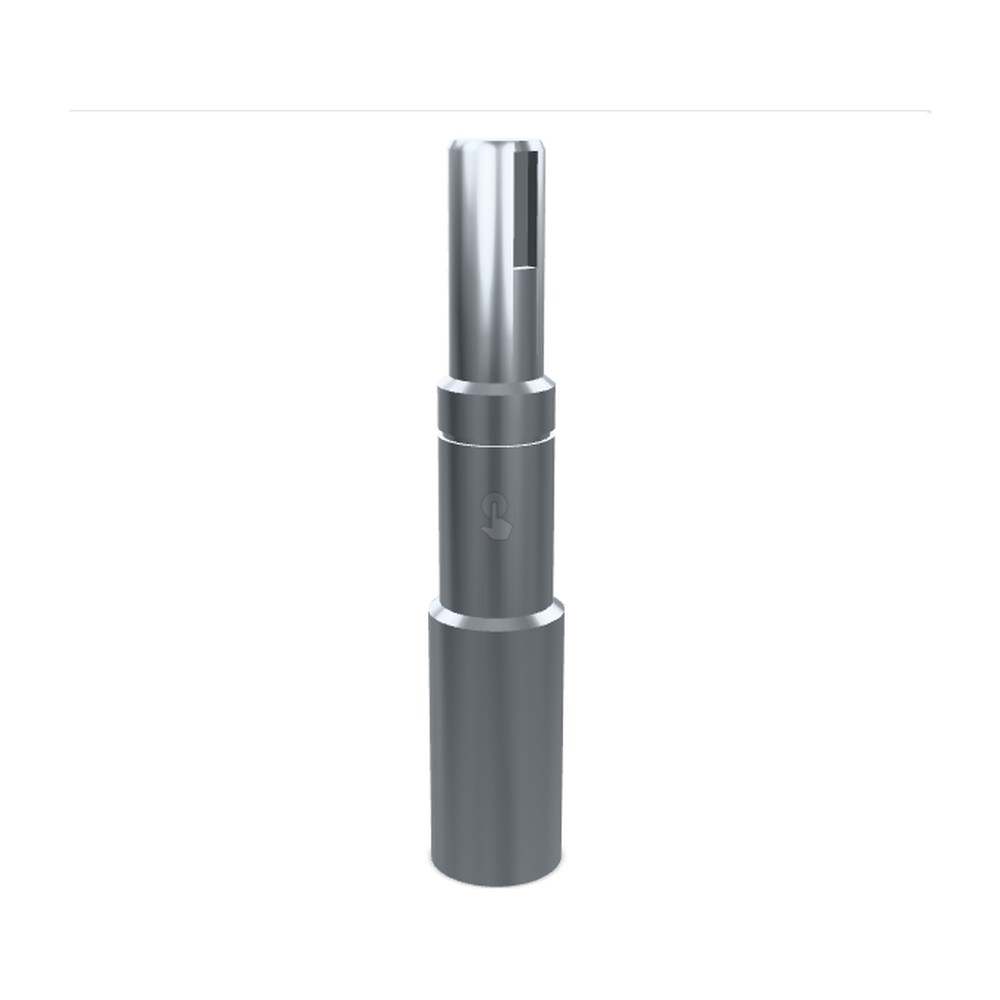
This is a stepped drive shaft: turned between diameters, with a ground bearing journal, a keyway and a retaining groove. Drag it, zoom it, and on a phone put it on your bench at true size. The numbered callouts are the features that decide whether it drops into a bearing bore or comes back.
Every dimension shown comes from the same data the quote uses. Nothing on this page is typed in twice, which is exactly how a drawing should work.
- Turning. Diameters, faces, grooves, threads and knurls, with live tooling for cross features so the part does not need a second machine.
- Milling. Pockets, slots, bores, bolt circles and profiles, from plate, bar or solid billet.
- Finishing to a number. Surface roughness and runout are specified and measured, not assumed.
Interactive
What a tolerance actually costs you
Tightening a tolerance is the easiest thing to do on a drawing and one of the most expensive things to do on a machine. Move the slider to see what each band demands of the setup and the inspection.
Tolerance band explorer
Five bands, from a general drawing default down to grinding territory.
Looser Tighter
Relative cost of the same part
Illustrative A relative index only, to show the shape of the curve. Your real number comes from your geometry, material and quantity at quote.
Standard precision
…
Interactive
Material comparison
The same part in three materials is three different parts. Pick a material to see published mechanical properties beside the reason a shop would choose it.
…
…
Choosing between them
…
Before you send it
Four things that make a quote fast
- The tolerance that actually matters. Mark it, and leave the rest at a general default. A print where every dimension is tight costs more and tells us less.
- Material and condition. 4140 in the annealed state and 4140 heat treated to a hardness are different jobs.
- Quantity, and whether it repeats. A one off and a first article for a run of 500 get programmed differently from the start.
- The finish and any coating. Anodise, plate, black oxide, paint. It changes the size we machine to.
Formats we take
| Format | Best for |
|---|---|
| STEP / STP | Solid models. Programmed from directly. |
| IGES | Solid or surface models. |
| DXF | Flat profiles for cut and formed work. |
| DWG | Native CAD drawings. |
| Dimensioned prints. We model here if needed. |
Questions we get asked at quote
Will you take a quantity of one?
Yes. Short runs and one offs are normal work here rather than an exception that gets quoted high to discourage it. If a part is a one off, we program it as a one off instead of tooling up for a run that is not coming.
What if I only have a broken part and no drawing?
Bring the part. We design in SolidWorks in house, so we can measure it, produce a drawing, and machine the replacement. You keep the drawing afterwards, which means the next order does not start from scratch.
How tight can you hold?
It depends on the feature, the material and how the part can be held, which is why the honest answer comes with your drawing in front of us rather than as a number on a website. The explorer above shows what each band demands. Anything tighter than the finest band usually means grinding or honing after machining, and we will tell you when that is the case.
Do you do first article inspection?
Yes, and it is worth doing before a production run rather than after. See prototyping and first articles for what the report actually proves.